Charleston Event Hosts Should Check Permits Before Booking Units
Picture a weekend wedding near the Crosstown Expressway with 120 guests, two portable toilets on the lawn, and nobody sure who signed off on the spot. That gap is where most hosts get stuck.
Yes, a temporary event permit can apply when a unit sits on public right-of-way, and the rule depends on where the unit lands rather than how big the party is. Hosts planning events near The Citadel or close to Charleston International Airport ask the same question every season.
Ask it before you book, not after the trailer shows up. We raise it on every quote so placement does not stall the morning of the event.
Which Permit Covers Your Charleston Site?
Charleston County Public Works is the local permitting authority for temporary event work, and the City of Charleston runs its own special event permit for any unit placed in public right-of-way. Those two lines catch hosts off guard. A unit parked on a sidewalk near Charleston City Market or along Columbus Street falls under city rules, even when the party itself sits inside a private courtyard nearby.
Start with one question: does any part of the unit touch public land? Private lots and rented venues usually need only the property owner’s written OK, while a truck staging on a city street may trigger the city’s paperwork.
Ask the county for its temporary sanitation specifications and get the answer in writing. A unit placed on a shoulder beside the Charleston Port Authority corridor, for example, is a different case from a backyard party in Hampton Park. We keep that reference in the job file before we book a drop-off.
Permit Timing Shapes Your Delivery Window
Events near North Charleston Riverfront Park or the Charleston Port Authority corridor often share truck routes with freight. A backup on Interstate 26 can push a delivery window past its slot, and a truck waiting on the shoulder is not a truck placing a unit.
The Charleston Area Regional Transportation Authority also runs routes where a poorly placed unit blocks a stop and draws a complaint fast. Give us the gate hours, the staging spot, and the permit reference so our spotter can plan the approach.
Is a DIY Permit Filing Enough, or Should You Call a Pro?
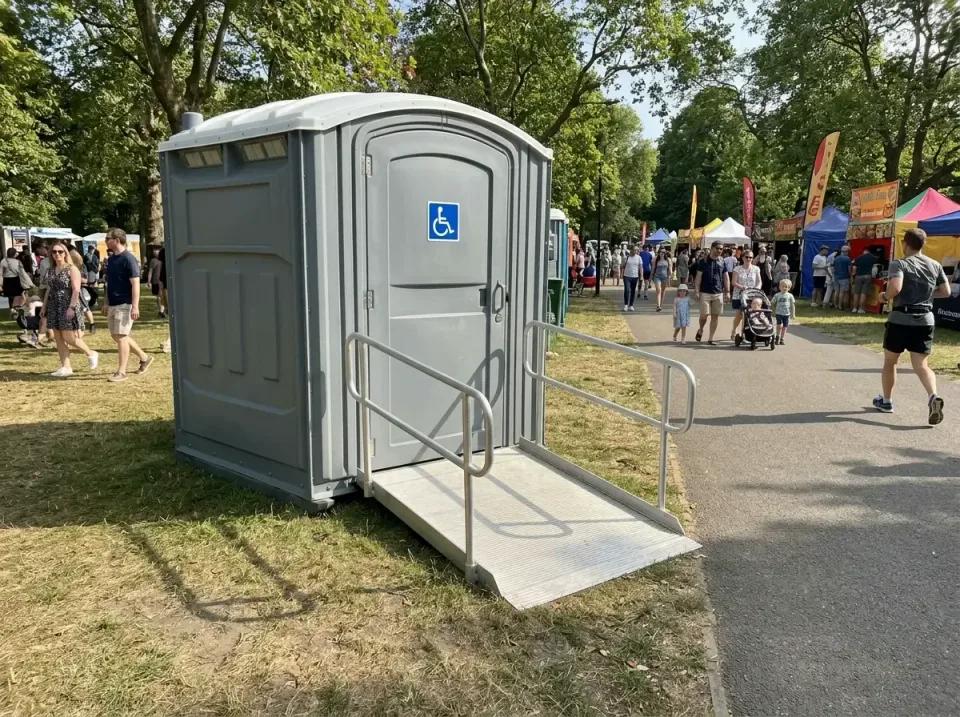
DIY works when the whole site sits on private land, one or two units go in, and the owner signs a short letter. Call a pro when the event crosses a street, needs an ADA accessible unit with 32-inch minimum door clearance, or includes a restroom trailer.
Our crew checks the site plan against the permit reference before drop-off, so the host is not guessing on event morning. Small mistakes here cost more than the paperwork does.
Keep Permit Paperwork Next to Your Event Plan
Keep the permit reference, site map, and placement photos in one folder. A host running a weekend event near the Charleston Museum may get a call from city staff, and a folder answers that call in seconds. Our crew sends the unit count and placement map with the quote, so the permit file matches what the truck delivers.
Which Permit Path Fits a College of Charleston Event?
A backyard birthday on a private lot and a street festival near the College of Charleston call for very different permit paths, so the site decides the answer. Charleston weather adds a second layer.
Hot humid summers, often above 90°F June through September, push service schedules tighter, and along U.S. Route 17 in Mount Pleasant or at James Island County Park, the same site can need two different plans in July and October.
| Option | Best for | Key detail |
|---|---|---|
| Private-lot placement | Backyards, church lots, rented venues | Written owner OK, with a county check advised |
| Public right-of-way | Sidewalk and street events | City special event permit applies |
| Restroom trailer | Large crowds on campus-adjacent streets | Multi-stall, roughly 8 ft by 20 ft |
| Summer outdoor event | June through September dates | Temperatures often above 90°F, more frequent service |
| Hurricane season event | June 1 through November 30 | Annual rainfall near 50 inches; tropical systems can force same-day pickup |
Pick the row that matches your site, then confirm the permit path before you sign.
Build a Permit File Before the Truck Rolls
A King Street pop-up or a Waterfront Park event leaves little room for a truck to back in, so start with the paperwork. Once the site is clear, the delivery crew needs a firm approach and a realistic service plan. High humidity slows portable unit cleaning and drying, so schedule the service visit before the event rather than after it.
| Document | Where it comes from | Why it matters |
|---|---|---|
| Site map with unit spots | Event host | Shows 10 ft clearance for pumper truck access |
| Owner written OK | Property owner | Required for private-land placement |
| Permit reference | County or city office | Confirms right-of-way use |
| Delivery gate hours | Venue manager | Sets the drop-off window at Charleston Maritime Terminal-area sites |
Return the file to us before drop-off so the placement matches the approval.
Ready to Get Help With Charleston Event Permits for Porta Potties?
Your event date and site location decide whether a permit check is needed, so start there. Fall events near Fort Sumter or the Gaillard Center often line up with calmer weather, while summer plans need extra planning. Here is what to weigh first:
-
Fall dates: Fall offers drier, milder weather suited to outdoor events, so file your permit early and keep the schedule loose.
-
Summer storms: Afternoon thunderstorms are often short and intense, so ask us about timing for mid-afternoon service.
-
Bridge-side events: Crowds near the Ravenel Bridge can change truck access, so confirm gate hours before drop-off.
-
Greenway events: Units along the West Ashley Greenway need clear placement, so mark each spot on your site map.